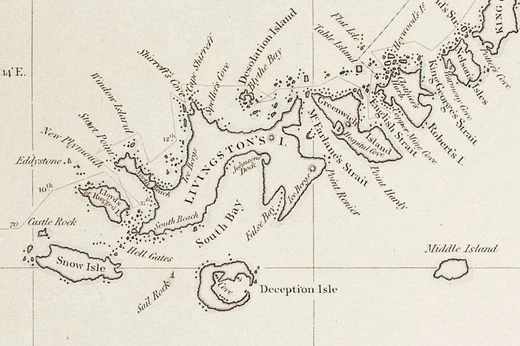
Geography
Geography is the study of Earth's lands, features, inhabitants, and phenomena.

Geography is the systematic study of the Earth, its lands, features, inhabitants, and phenomena. It is an all-encompassing discipline that seeks an understanding of Earth and its human and natural complexities, serving as a bridge between natural science and social science disciplines.
- field
- Geography
- known_for
- Study of Earth's spatial and temporal distribution of phenomena, processes, and features; core concepts include space, place, time, and scale
Lore & Background
The history of geography as a discipline spans cultures and millennia, having been independently developed by multiple groups and cross-pollinated through trade. The earliest example of an attempted world map dates to the 9th century BC in ancient Babylon. Origins of many geographic concepts can be traced to Greek Eratosthenes of Cyrene, who may have coined the term 'geographia' (c. During the Middle Ages, geography was influenced by Islamic scholars such as Muhammad al-Idrisi, who produced detailed maps of the world. The Age of Discovery was influential as European explorers mapped the New World. Modern developments include geomatics and geographic information science.
Reader's Guide
Geography is an extremely broad discipline with multiple approaches and modalities. The main branches are physical geography (focusing on the natural environment), human geography (how humans interact with the Earth), and technical geography (developing tools for understanding geography). Techniques include cartography, remote sensing, interviews, and surveying, employing quantitative, qualitative, and mixed-methods approaches. Core concepts consistent across all approaches are space, place, time, and scale. The five themes of geography—location, place, relationships within places (human-environment interaction), movement, and regions—have shaped American education. During the quantitative revolution, geography shifted to an empirical law-making approach, with several laws proposed, most notably Tobler's first law of geography, though the existence and numbering of such laws remain subjects of ongoing debate.
Did You Know?
- The earliest example of an attempted world map dates to the 9th century BC in ancient Babylon.
- During the Middle Ages, Islamic scholar Muhammad al-Idrisi produced detailed maps of the world.
More in Phantom Places & Discovery 1-24
Elsewhere in the Phantom Places & Discovery universe
Spotted an error? Know more?
This is a living reference — every entry is fact-audited, and reader corrections feed straight into our audit queue. Suggest an edit · See this site's audit record